The three ways we run an on-camera interview
Rehearsed delivery. The client has learned their lines the way an actor learns a scene. They know exactly what they are going to say, they walk in, and they deliver it. Honestly, this almost never happens unless we are working with paid talent who have had time to rehearse.
Interview style. We build a list of questions and use them to guide you through the conversation. The questions keep you moving in a clear direction instead of talking into open air, so we come away with a real story we can structure in the edit. This is the most natural sounding option and it is what we use most often.
Teleprompter. You read a finished script while looking straight down the lens. That is what the rest of this post is about.
How a teleprompter actually works
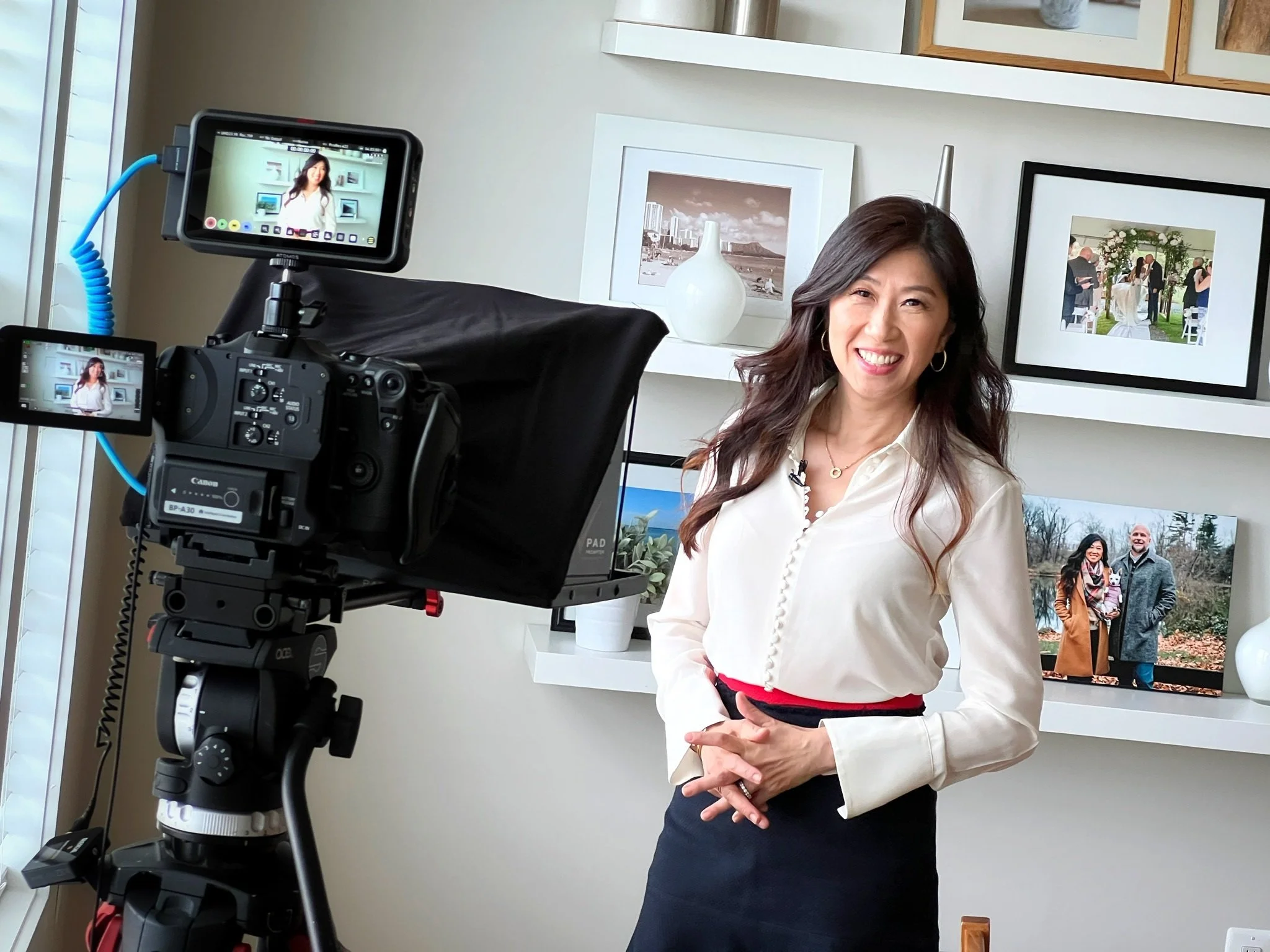
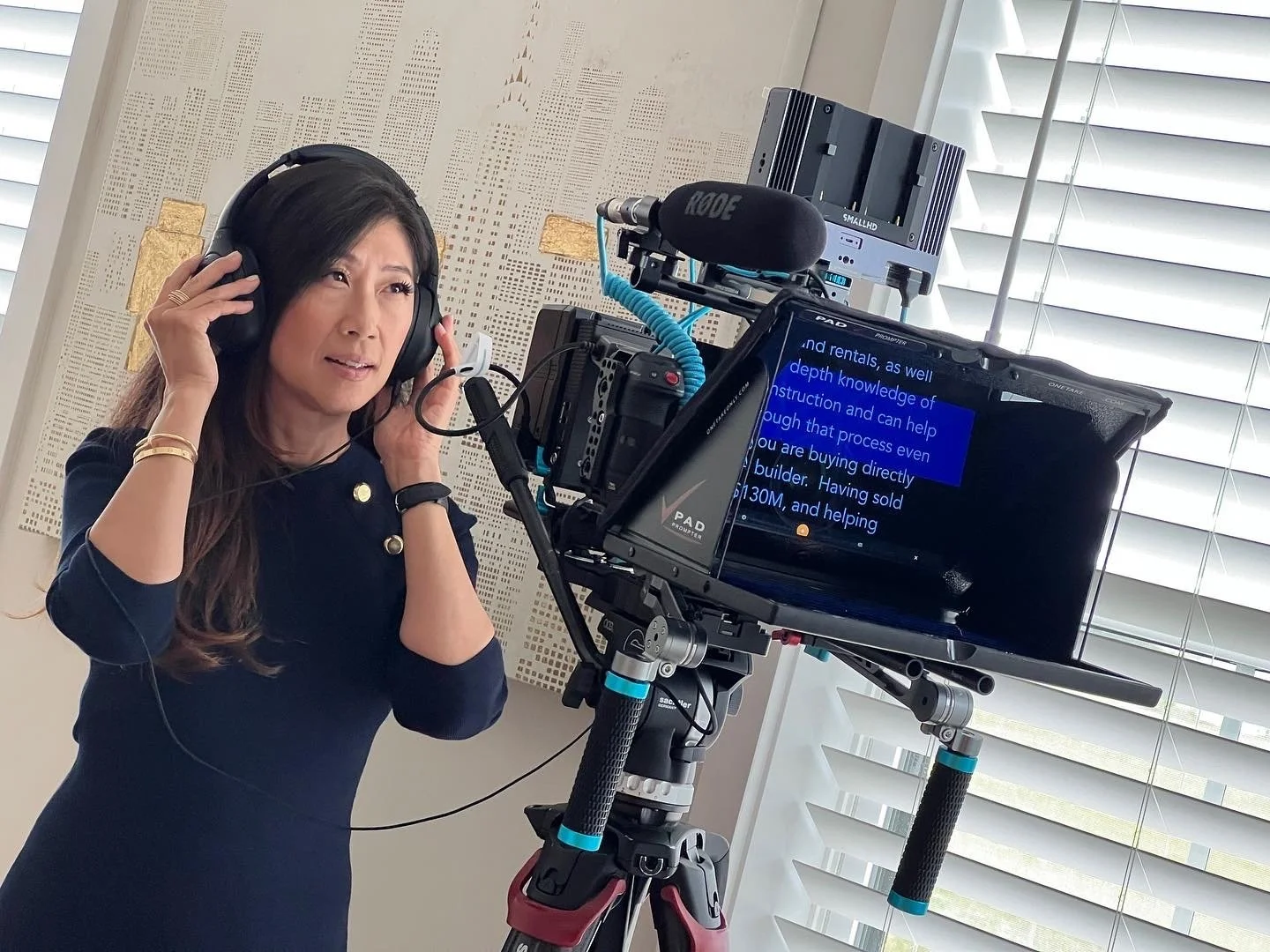
The unit sits between you and the camera lens. Your script scrolls across a piece of glass in front of the glass of the lens, so while you are reading, you are also looking directly into the camera. To the viewer it reads as straight eye contact. Nothing about it looks like you are reading.
You have seen this used constantly, in political speeches, corporate announcements, keynote presentations. The reason is always the same. The speaker has specific language they need to get right and they do not want to drift away from it.
We want your script finished before we arrive
When you book a teleprompter with us, we work with you ahead of the shoot to get to a final script. Not a rough draft, not a bulleted outline. Final.
That matters because we load your actual words into the prompter before shoot day and test them. We check the scroll speed against your natural reading pace, we check line breaks, and we make sure the text is sized so you are comfortable at whatever distance you are standing. When you walk in, the machine is already dialed in to you.
You say the exact same thing on every take
This is the biggest advantage. If we want to run a sentence four times to get the delivery right, you are going to say the identical sentence all four times.
That does not happen in interview style. There are always words that shift. You start thinking about it between takes, you rephrase something, and now the editor is working with four slightly different versions of the same idea. With a prompter, the editor has your script in hand and is simply picking the best performance of a line they already know is coming. The edit gets faster and the final piece is tighter.
It makes the whole day more streamlined
Having a script means you get to practice before we ever show up. You walk onto set already familiar with the material instead of discovering it in real time. You read, we roll, we move on. Shoots that would stretch out across a long block of takes come in noticeably shorter.
The one thing we ask of you
Read your script out loud a few times before shoot day. Not memorized, just familiar.
A teleprompter is not a substitute for preparation. If the first time you see those words is when they start scrolling, it shows. The delivery gets flat, the pacing fights the scroll, and you end up doing more takes than you would have without it. Ten or fifteen minutes with your own script beforehand is the difference between sounding like you are reading and sounding like you are talking.
When we recommend it
A teleprompter is the right call when the exact wording matters. Explainer videos, technical walkthroughs, product breakdowns, executive announcements, anything with compliance language or approved messaging, any script that took your team a week to write and sign off on.
If your goal is a loose, conversational story about your business, interview style is usually the better fit. If your goal is to say a specific thing in a specific way, the prompter wins every time.
Adding it to your shoot
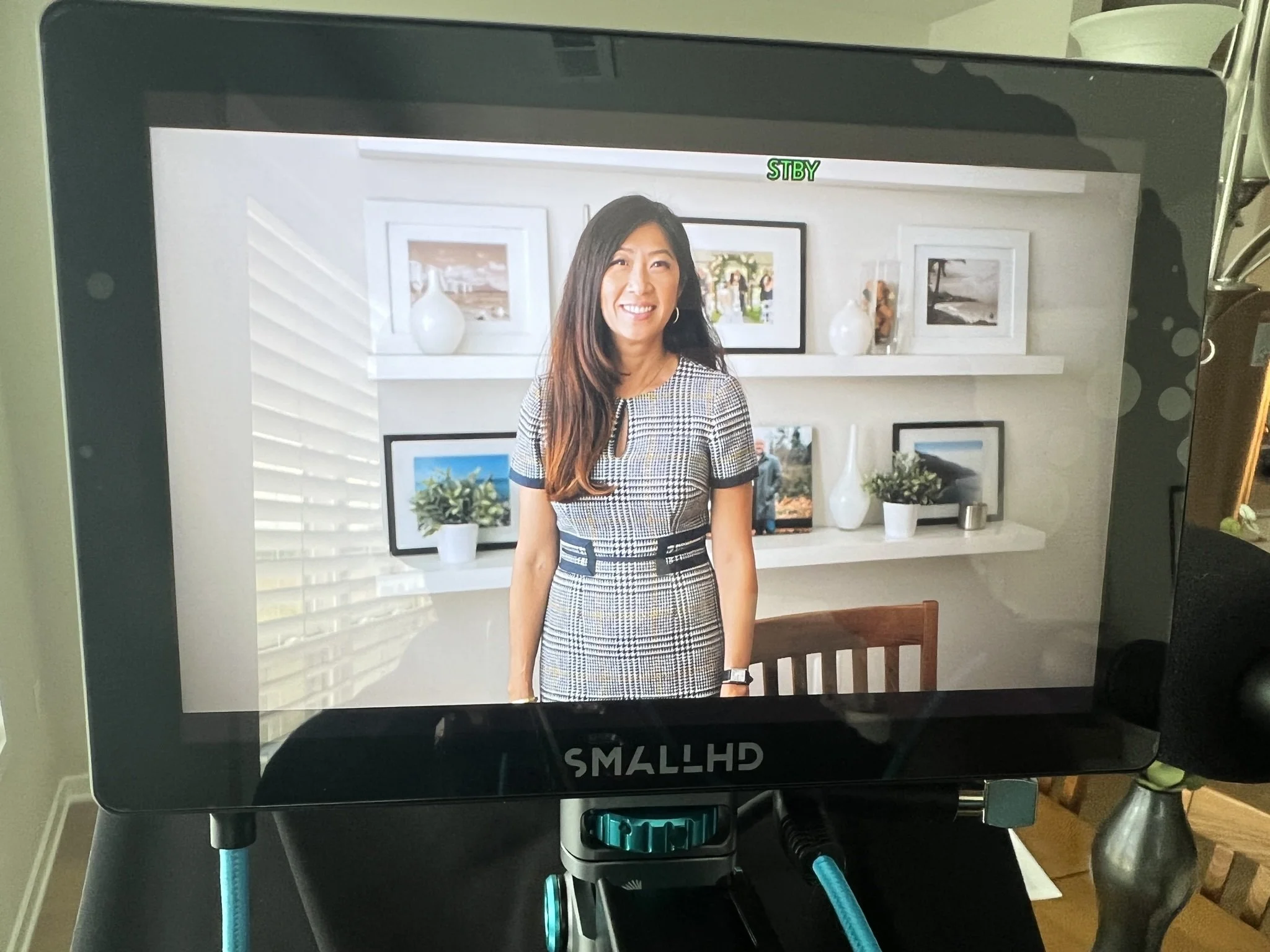
Teleprompter operation is available as an add-on to any video project we produce. We bring the hardware, we load and test your script ahead of time, and we run it live on set so you can focus on delivery.
If you have a project coming up and you are not sure which of the three approaches fits, reach out and we will talk it through with you before you write a single line.